
Juicy Baked Chicken Breast Recipe: Tender, Flavorful & Easy

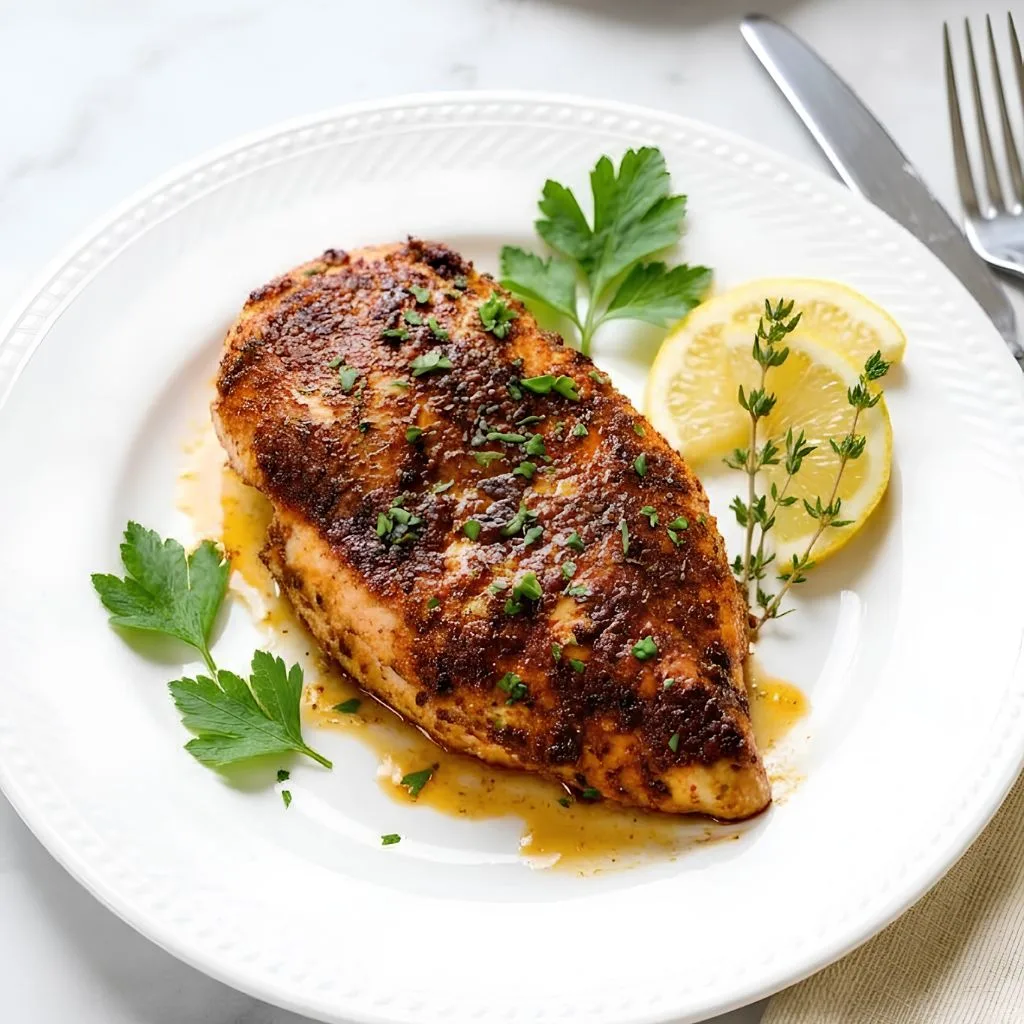
I love making Juicy Baked Chicken Breast Recipe when I want a simple, delicious meal without spending hours in the kitchen. After making this recipe, I discovered that a few basic seasonings and the right oven temperature can make a big difference. The chicken turns out tender, flavorful, and beautifully golden on the outside, with every bite full of moisture.
I also love how easily I can pair it with roasted vegetables, rice, mashed potatoes, or a fresh chicken salad. If you want a reliable baked chicken breast recipe for busy weeknights or meal prep, this one is worth trying!
Cooking Time
Here is how much time you need to prepare and cook this easy chicken dinner.
- Prep Time: 10 minutes
- Cooking Time: 20–25 minutes
- Total Time: 30–35 minutes
Ingredients for Juicy Baked Chicken Breast
I use simple pantry ingredients to create a flavorful coating that helps the chicken develop a delicious golden surface without overpowering its natural taste.
- 4 boneless, skinless chicken breasts (about 6–8 ounces each): Choose similarly sized pieces for even cooking.
- 2 tablespoons olive oil: Helps the seasonings stick and keeps the surface from drying out.
- 1 teaspoon salt: Enhances the chicken’s natural flavor.
- ½ teaspoon black pepper: Adds gentle warmth and a savory finish.
- 1 teaspoon paprika: Gives the chicken an appealing color and mild smoky flavor.
- 1 teaspoon garlic powder: Adds savory garlic flavor without burning as fresh garlic sometimes can.
- 1 teaspoon onion powder: Creates a deeper, well-rounded seasoning blend.
- ½ teaspoon dried oregano: Brings a subtle herbal note to every bite.
- ½ teaspoon dried thyme: Adds a delicate earthy flavor that complements chicken.
- 1 tablespoon fresh lemon juice: Brightens the seasoning and balances the richness of the olive oil.
- 1 teaspoon chopped fresh parsley (optional): Makes the finished chicken look fresh and inviting.
Note: Serves 4 people, with one chicken breast per serving.
Equipment You Need
Having the right equipment makes preparing this recipe easier and helps the chicken cook evenly.
- Baking dish or rimmed baking sheet: Holds the chicken while it cooks in the oven.
- Meat thermometer: Checks the thickest part of each breast for safe doneness.
- Small mixing bowl: Makes it easy to combine the oil and seasonings.
- Measuring spoons: Help keep the seasoning quantities consistent.
- Cutting board: Provides a clean, stable surface for preparing the chicken.
- Kitchen tongs: Allow you to move the chicken without piercing it unnecessarily.
- Aluminum foil: Can loosely cover the chicken during resting if needed, although it is not essential.
How to Make a Juicy Baked Chicken Breast Recipe?
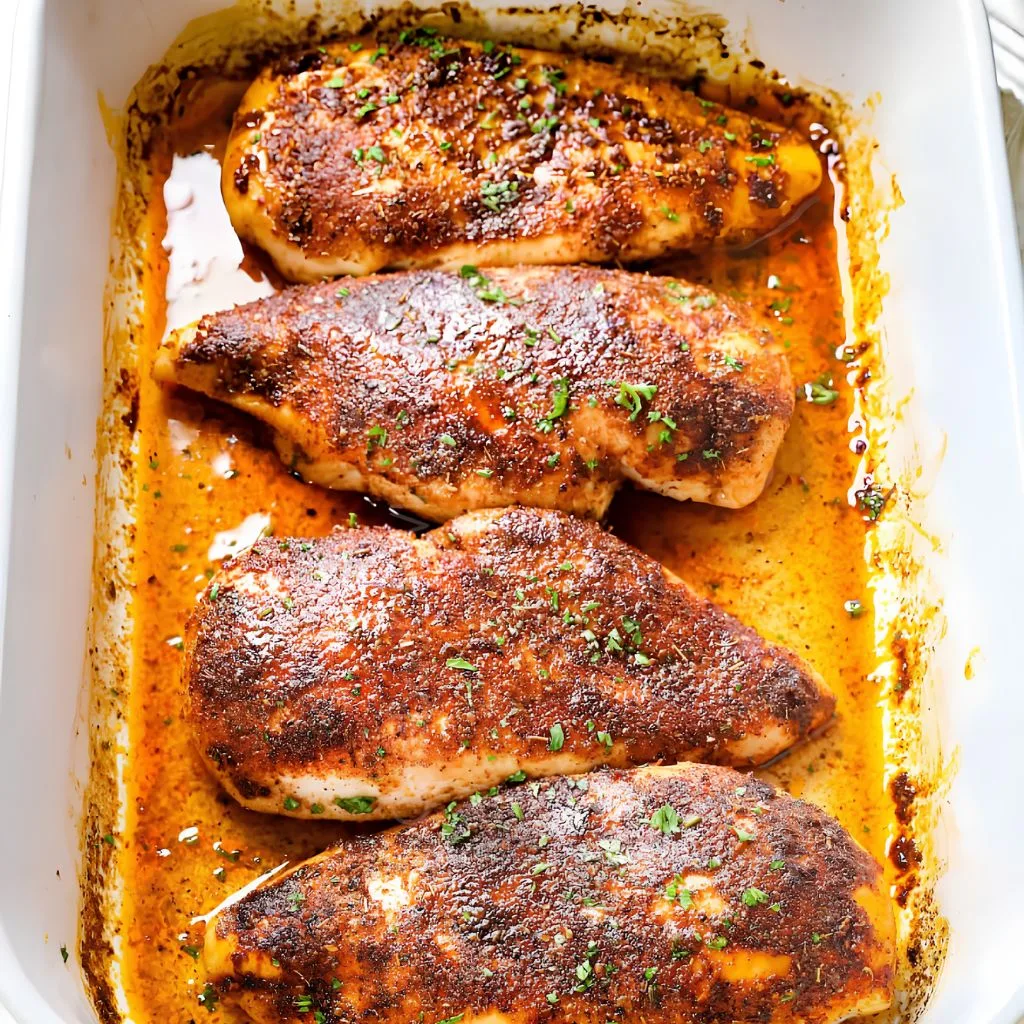
This recipe uses a simple seasoning mixture, a hot oven, and a short resting period to produce tender, flavorful chicken. I recommend choosing breasts of similar thickness and checking their internal temperature rather than relying on cooking time alone. Follow these easy steps to make a dependable chicken dinner with very little effort.
Step 1: Preheat the Oven
Preheat your oven to 425°F (220°C) and lightly grease a baking dish with olive oil. This temperature helps the outside develop color while the inside cooks relatively quickly.
Allow the oven to finish preheating before adding the chicken. Starting with a properly heated oven helps you achieve more consistent results.
Step 2: Prepare the Chicken Breasts
Pat the chicken breasts dry with paper towels to remove excess surface moisture. This helps the oil and seasonings coat the meat evenly.
If the breasts vary significantly in thickness, gently pound the thicker portions until they are more uniform. Avoid pounding them too thin, as that can make them cook too quickly and dry out.
Step 3: Mix the Seasonings
Combine the olive oil, salt, black pepper, paprika, garlic powder, onion powder, oregano, thyme, and lemon juice in a small bowl. Stir until you have a smooth, fragrant seasoning mixture.
Taste the mixture before adding it to the raw chicken, adjusting the dry seasonings if necessary. A balanced blend should be savory, lightly smoky, and fresh.
Step 4: Coat the Chicken
Arrange the chicken breasts in your prepared baking dish, leaving a little space between each piece. Spread the seasoning mixture over both sides, making sure the thicker areas receive an even coating.
Use clean hands or kitchen tongs to distribute the mixture. Avoid overcrowding the dish because closely packed chicken can release moisture and cook less evenly.
Step 5: Bake Until Fully Cooked
Place the dish in the preheated oven and bake for approximately 20–25 minutes, depending on the size and thickness of the breasts. Begin checking the temperature early so smaller pieces do not overcook.
The chicken is ready when the thickest part reaches 165°F (74°C) on a food thermometer. Do not rely on color alone to determine whether it is safely cooked.
Step 6: Let the Chicken Rest
Remove the chicken from the oven once it reaches the safe internal temperature. Transfer it to a clean plate and let it rest for about 5 minutes before cutting.
This short resting period gives the juices time to settle throughout the meat. Finish with fresh parsley and a small squeeze of lemon juice for extra freshness.
Step 7: Slice and Serve
Slice the chicken across the grain into even strips or serve each breast whole. Spoon any suitable cooking juices from the dish over the meat for extra flavor.
Serve immediately with your favorite vegetables, rice, potatoes, or salad. If you are preparing meals ahead, allow the chicken to cool promptly before refrigerating it in a shallow, airtight container.
Additional Tips for Making This Recipe Better
After preparing baked chicken breast, I have found that a few small details can make the difference between ordinary chicken and a tender, flavorful meal.
- I always check the thickness: When the breasts are similar in size, I find it much easier to cook them evenly without drying out the smaller pieces.
- I use a thermometer instead of guessing: I check the thickest part and remove the chicken as soon as it reaches 165°F (74°C).
- I avoid skipping the resting time: Giving the chicken about 5 minutes to rest helps keep the slices moist when I cut into them.
- I season both sides: I spread the seasoning mixture evenly instead of concentrating it on top.
- I add lemon at the end: When I want a brighter flavor, I finish with fresh lemon juice just before serving.
- I make extra for lunch: I often cook additional chicken for wraps, sandwiches, and a quick chicken salad recipe the next day.
- I adjust the seasoning to the meal: For Mediterranean dishes, I use extra oregano; for a smoky flavor, I increase the paprika slightly.
Common Mistakes to Avoid
Even an easy baked chicken breast recipe can go wrong if a few important details are overlooked.
- Overcooking the chicken: I use a thermometer instead of relying only on the clock because dry chicken is often the result of excessive cooking.
- Using uneven pieces: I gently flatten thicker portions so the entire breast cooks at a similar rate.
- Skipping the preheating step: I wait until the oven reaches the correct temperature before putting the chicken inside.
- Cutting the chicken immediately: I let it rest for about 5 minutes to help preserve its juices.
- Overcrowding the baking dish: I leave space between the breasts so heat can circulate around them.
How to Serve Juicy Baked Chicken Breast?
This versatile chicken works with simple sides or a more elaborate dinner spread. I like to choose colorful accompaniments that complement the golden seasoning.
Serve it with roasted potatoes, steamed broccoli, green beans, rice, or creamy mashed potatoes for a satisfying meal. A crisp garden salad or a light cucumber salad adds freshness and balances the savory flavor.
For an attractive presentation, arrange sliced chicken slightly overlapping on a platter, spoon a little cooking juice over the top, and sprinkle with chopped parsley. Add lemon wedges around the edges for color.
If you enjoy baked chicken breast recipes with sauce, try serving the chicken with a light garlic-lemon sauce, mushroom sauce, or a tomato-based sauce. Keep extra sauce on the side so the seasoned surface retains its flavor.
Variations
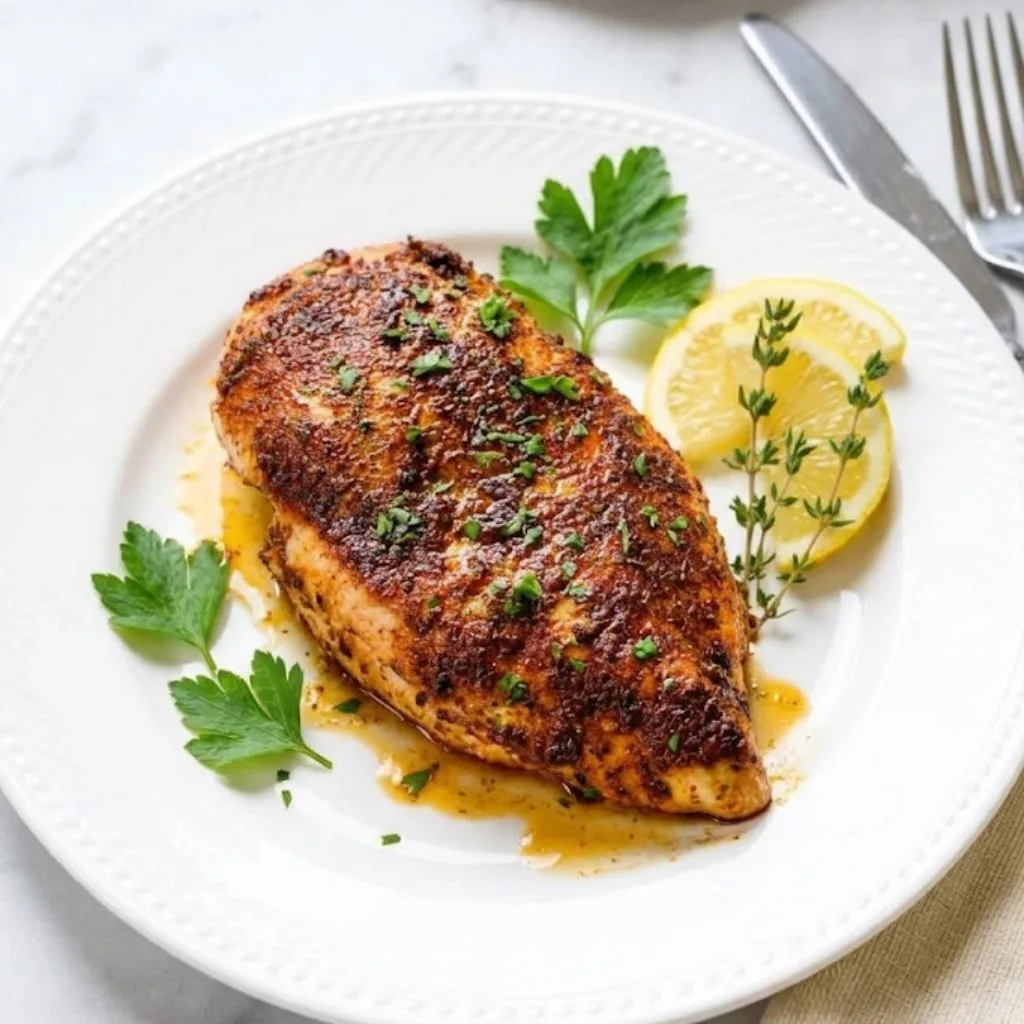
One reason I enjoy this recipe is that I can change the seasonings and serving style without changing the basic cooking method.
- Spicy chicken: Add cayenne pepper or chili flakes for extra heat.
- Lemon-herb chicken: Increase the lemon zest and use extra thyme, oregano, or rosemary.
- Italian-inspired chicken: Add Italian seasoning and serve with tomato sauce and roasted vegetables.
- Honey-paprika chicken: Add a small amount of honey for a sweet, smoky glaze, watching carefully to prevent excessive browning.
- Dairy-free version: The basic recipe is already dairy-free when prepared with olive oil and dairy-free accompaniments.
- Sugar-free version: Keep the original seasoning blend and skip sweet glazes or honey.
- Garlic butter variation: Finish with a small amount of garlic butter if you are not avoiding dairy.
- Saucy baked chicken: Pour a suitable tomato or light broth-based sauce around the chicken before baking, then check doneness with a thermometer.
- Pan-cooked alternative: To learn how to cook chicken breast in a pan, season the chicken, sear it in a lightly oiled skillet, and finish over moderate heat until it reaches 165°F (74°C).
Nutritional Information
The following figures are estimates for one serving, assuming four servings and the listed ingredients. Actual values vary with the size of the chicken breasts and how much oil remains in the dish.
- Calories: Approximately 300–330
- Protein: Approximately 45–50 g
- Carbohydrates: Approximately 2–4 g
- Fat: Approximately 10–13 g
Make Ahead and Storage
Preparing chicken in advance makes weeknight dinners and packed lunches much easier. I recommend storing the chicken properly and reheating it gently to maintain its texture.
Make Ahead
Mix the dry seasonings in advance and keep them in a small airtight container. You can also prepare the oil and seasoning mixture shortly before cooking.
For the best texture, bake the chicken close to serving time. If you prepare it ahead, refrigerate cooked portions promptly and reheat them thoroughly before serving.
Refrigeration
Place leftover chicken in an airtight container and refrigerate within 2 hours of cooking, or within 1 hour when the surrounding temperature exceeds 90°F (32°C). Properly refrigerated cooked chicken generally keeps for 3–4 days.
Store the chicken in individual portions to make lunch preparation easier. Keep sauces in a separate container when possible to help preserve the seasoning and texture.
Freezing
Let the cooked chicken cool promptly, divide it into meal-sized portions, and seal it in freezer-safe containers or bags. Label each package with the date so you can keep track of storage time.
For best quality, use frozen cooked chicken within about 2–3 months. Thaw it in the refrigerator rather than on the counter, and reheat it thoroughly before eating.
Reheating
For oven reheating, place the chicken in an oven-safe dish with a tablespoon or two of broth or water. Cover loosely and heat at 325°F (165°C) until the center reaches 165°F (74°C).
You can also microwave individual portions in a covered microwave-safe dish, checking the temperature before serving. Avoid repeated reheating because it can make the meat dry and tough.
Why You’ll Love This Recipe
This juicy baked chicken breast recipe is a practical favorite because it combines everyday ingredients with a cooking method that works for many different meals.
- Easy for beginners: I appreciate that the preparation involves only a few straightforward steps. You do not need complicated techniques or specialty ingredients to make a flavorful chicken dinner.
- Juicy and satisfying: When I use evenly sized breasts and check their internal temperature, the chicken is much less likely to become dry from overcooking.
- Perfect for meal prep: I can prepare several portions at once and use them throughout the week in salads, sandwiches, wraps, and grain bowls.
- Easy to customize: I can change the herbs, spices, or finishing sauce to match different cuisines without learning a completely new recipe.
- Suitable for different diets: The basic recipe contains no dairy and very little carbohydrate. It can fit into many eating styles when paired with suitable side dishes.
Frequently Asked Questions
What Temperature Should I Cook Chicken Breast in the Oven?
I recommend 425°F (220°C) for this recipe because it cooks boneless chicken breasts relatively quickly while helping the outside develop color. Always confirm that the thickest part reaches 165°F (74°C).
How Long Should I Cook Chicken Breast in the Oven at 350°F?
At 350°F (175°C), boneless chicken breasts often take approximately 25–35 minutes, depending on their thickness and size. Begin checking early and use a meat thermometer rather than relying solely on the estimated time.
How Long Should I Cook Chicken Breast in the Oven at 200°C?
At 200°C (392°F), boneless chicken breasts typically take around 20–30 minutes, depending on thickness. Check the internal temperature near the end of cooking and remove the chicken once it reaches 165°F (74°C).
How Can I Bake Boneless Chicken Breasts So They Stay Moist?
I pat the chicken dry, coat it evenly with oil and seasonings, and avoid overcooking it. Choosing breasts of similar thickness, checking the temperature, and resting the meat before slicing are especially helpful.
Can I Use This Recipe for Chicken Thighs or Add Sauce?
Yes, you can adapt the seasonings for boneless chicken thighs, but their cooking time may differ, so check the internal temperature. You can also serve the breasts with a separate sauce or bake them with a suitable sauce while monitoring doneness.
Final Thoughts
I keep coming back to this juicy baked chicken breast recipe because it is simple, adaptable, and easy to fit into everyday meals. With a balanced seasoning blend, the right oven temperature, and careful temperature checking, you can make tender chicken without complicated preparation.
Serve it fresh with your favorite sides, or prepare extra portions for salads, sandwiches, and quick lunches. Once you are comfortable with the basic method, experiment with different herbs and sauces to create a version your family will enjoy.
