
The landscape of home comfort has evolved significantly, with smart AC systems leading the charge in innovation. Unlike conventional units, smart ACs leverage advanced technology and internet connectivity to offer unparalleled control, efficiency, and convenience. As of August 2026, these systems are more sophisticated than ever, integrating features that were once considered futuristic into everyday home management.
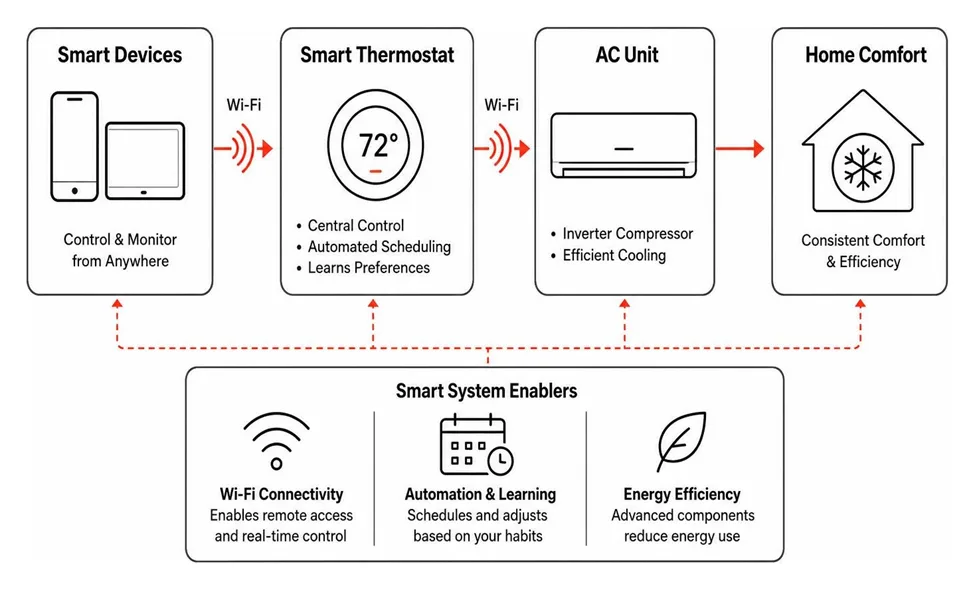
At their core, smart AC systems often include smart thermostats, which act as the central brain, communicating with your cooling unit and the outside world via Wi-Fi modules. This connectivity allows for remote telemetry, enabling us to monitor and adjust settings from anywhere using a smartphone or other smart devices. Beyond simple remote control, these systems employ automated scheduling, learning our preferences and adjusting temperatures proactively. The integration of cutting-edge components like inverter compressors and adherence to enhanced efficiency standards, such as SEER2 (Seasonal Energy Efficiency Ratio 2), further distinguish smart ACs from their traditional counterparts. These advancements aim not just for comfort, but for significant reductions in electricity consumption and environmental impact.
Central Air vs Ductless Mini-Split Configurations
When considering a new AC system, homeowners typically weigh two primary configurations: central air (ducted split systems) and ductless mini-split systems. Each offers distinct advantages depending on the home’s structure, existing infrastructure, and cooling needs.
Ducted split systems, commonly referred to as central air, distribute cooled air throughout the entire home via a network of ducts. These systems typically consist of an outdoor condenser unit and an indoor air handler connected by refrigerant lines and electrical wiring. They are ideal for homes with existing ductwork or new constructions where duct installation is integrated into the building process. Central air provides uniform cooling across multiple rooms, offering a consistent temperature and improved indoor air quality through filtration. However, they are susceptible to thermal loss if ductwork is not properly sealed and insulated, which can significantly reduce efficiency.
Ductless mini-split systems, on the other hand, bypass the need for extensive ductwork. They comprise an outdoor compressor/condenser unit connected to one or more indoor air handlers via a small conduit, typically requiring only a three-inch hole in the wall. This makes them an excellent solution for homes without existing ducts, room additions, converted spaces like attics or basements, or for creating multi-zone comfort. Each indoor unit can be controlled independently, allowing for precise temperature regulation in specific rooms or zones. This zoning capability can lead to energy savings by only cooling occupied areas. While mini-splits eliminate thermal loss associated with ducts, their aesthetic impact (visible indoor units) and ventilation limitations (recirculating indoor air rather than integrating fresh air) are considerations. Retrofit installation is significantly easier with mini-splits compared to installing new ductwork in an older home, making them a popular choice for targeted cooling solutions.
Variable-Speed Inverters and Energy Efficiency Ratings
A key technological advancement driving the efficiency of modern smart AC systems is the variable-speed inverter compressor. Unlike traditional single-stage compressors that operate at full capacity or are completely off, inverter technology allows the compressor to continuously modulate its speed and output. This precise control is achieved through brushless DC motors, which are inherently more efficient and durable.
The continuous modulation capability of variable-speed inverters means the system can precisely match the cooling demand of your home. Instead of frequently cycling on and off, which is energy-intensive and causes temperature fluctuations, an inverter AC can run at lower speeds for longer durations, maintaining a more consistent temperature. This partial-load efficiency is where significant electricity consumption savings are realized. By avoiding constant starts and stops, these systems reduce wear and tear on components, potentially extending the lifespan of the unit. The reduction in cycling also helps to remove more humidity from the air, enhancing comfort without overcooling.
Energy efficiency ratings, such as SEER2 and HSPF2 (Heating Seasonal Performance Factor 2 for heat pumps), provide a standardized way to compare the performance of different AC units. As of August 2026, the minimum SEER2 allowed for new split system central ACs in the US is 14, with Energy Star guidelines requiring a minimum of 15. The most efficient models can achieve SEER2 ratings of 26 or higher. While higher SEER2 ratings often come with a greater upfront cost, they translate into lower annual energy bills, offering a quicker payback period for the initial investment, especially in climates with long cooling seasons.
Weighing the Pros and Cons of Upgrading to Smart AC Systems
Deciding whether to upgrade to a smart AC system involves a careful evaluation of its numerous advantages against potential drawbacks. For homeowners, this means looking beyond the initial appeal of technology to understand the long-term implications for comfort, cost, and convenience.
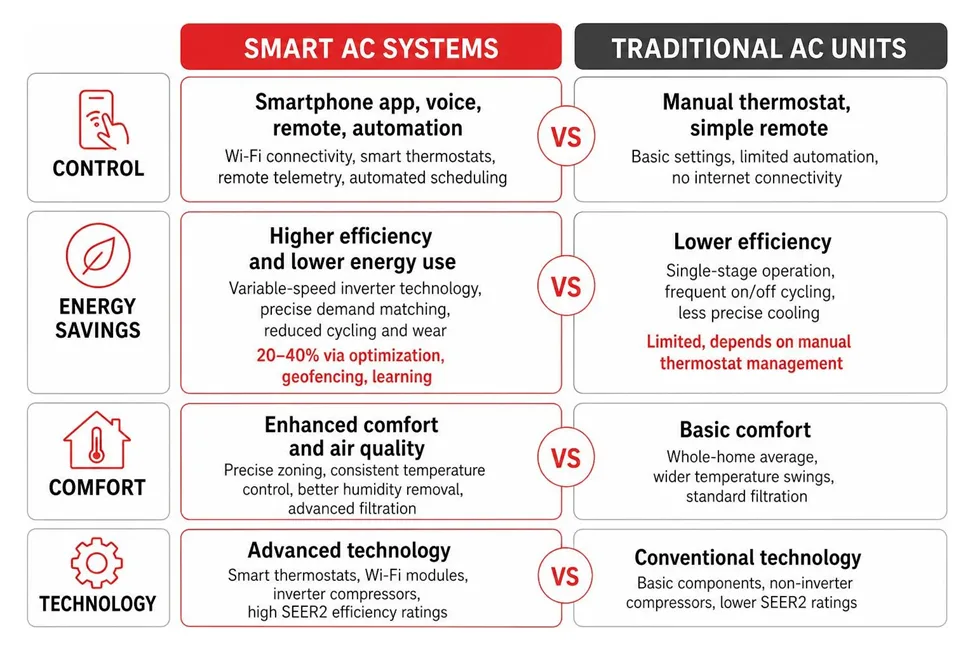
Feature Smart AC Systems Traditional AC Units Control Smartphone app, voice, remote, automation Manual thermostat, simple remote Energy Savings 20-40% via optimization, geofencing, learning Limited, depends on manual thermostat management Comfort Precise zoning, consistent temperature, humidity Whole-home average, wider temperature swings Integration Smart home ecosystems (Alexa, Google Home) Standalone unit Maintenance Predictive alerts, self-diagnostics Manual checks, reactive repairs Initial Cost Higher Lower Connectivity Requires Wi-Fi, internet No internet required Complexity Potentially higher setup, learning curve Simple operation Privacy Data collection for optimization Minimal data collection This table highlights the core differences, showing that while smart ACs offer significant operational savings and enhanced equipment longevity through optimized performance, they also come with a higher initial investment and connectivity requirements that homeowners must consider.
Long-Term Energy Savings and Utility Optimization
One of the most compelling reasons for homeowners to invest in smart AC systems is the potential for significant long-term energy savings. Smart ACs are designed to optimize energy consumption in ways traditional units cannot. Features like geofencing automation allow the system to detect when you leave or approach your home, automatically adjusting the temperature to save energy when no one is present and pre-cooling before your arrival. This means you never waste energy cooling an empty house, but always return to a comfortable one.
Occupancy sensors take this a step further, detecting which rooms are in use and directing cooling only where it’s needed, creating efficient multi-zone comfort. For homes with varying schedules or unoccupied rooms, this can lead to substantial reductions in electricity use. Furthermore, many smart AC systems offer peak-demand response capabilities, allowing them to communicate with local utility companies. In exchange for incentives, the system can slightly adjust temperatures during periods of high energy demand, helping to stabilize the grid and saving you money.
Real-time tracking and energy monitoring features provide detailed insights into your AC’s energy usage, allowing you to identify patterns and make informed decisions to further reduce consumption. Statistics show that smart thermostats alone can save users an average of 8% on utility bills, according to EPA data. When combined with smart AC systems, this can escalate to 20-40% energy reduction compared to traditional units, especially when properly configured and utilized. These savings, often enhanced by utility rebates and tax credits for high-efficiency smart units, can help offset the higher initial investment over time.
Installation Complexity, Connectivity, and Maintenance Considerations
While the benefits are clear, smart AC systems do introduce certain complexities that homeowners should be aware of. Installation, for instance, can be more involved than with a traditional unit. Many smart thermostats and some smart AC units require a “C-wire” (common wire) to provide continuous power. Older homes or HVAC systems may lack this wire, necessitating professional installation or the use of an adapter, which adds to the initial setup.
Connectivity is paramount for smart features to function. Reliable Wi-Fi and internet access are essential for app control, voice commands, and smart home integration. Any disruption in internet service will limit the system’s “smart” capabilities, although basic cooling functionality typically remains accessible via a physical remote. This reliance on connectivity also brings cyber security and privacy concerns. Like any internet-connected device, smart ACs can be vulnerable to hacking if not properly secured, potentially exposing personal data or providing an entry point into your home network. It’s crucial to choose reputable brands and maintain strong network security.
Hardware compatibility is another consideration. While many smart AC systems are designed to integrate with popular smart home ecosystems like Amazon Alexa, Google Home, or Apple HomeKit, verify compatibility with your existing smart devices before purchase.
Maintenance for smart ACs involves both traditional HVAC upkeep and new digital responsibilities. Regular filter replacements and coil cleaning remain critical for efficiency and air quality. However, smart systems also benefit from firmware updates to enhance security, add features, and improve performance. Predictive diagnostics and diagnostic alerts are significant advantages, as they can notify you of potential issues like low refrigerant or dirty filters before they lead to major breakdowns, potentially preventing 90% of surprise failures. However, these advanced electronic components, while beneficial, can also be more complex and potentially more expensive to repair if they malfunction.
When to Invest in Expert HVAC Services for System Upgrades
Deciding when to upgrade your HVAC system, especially to a smart AC, is a significant financial and comfort decision. It’s not just about buying a new unit; it’s about ensuring proper integration, optimal performance, and long-term reliability. This is precisely where the expertise of HVAC professionals becomes invaluable.

We often recommend consulting with expert HVAC services when facing key decision points, such as an aging system, recurring repairs, or the desire for significant energy efficiency improvements. These professionals can provide a comprehensive assessment of your current setup and guide you through the complexities of modern smart AC technologies. Their knowledge ensures that your investment is sound and tailored to your specific home and climate needs.
Evaluating Home Infrastructure with Expert HVAC Services
Before installing any new AC system, particularly a smart one, a thorough evaluation of your home’s infrastructure is critical. This is not a task for the average DIY enthusiast, as it involves specialized knowledge and tools.
Expert HVAC services will meticulously inspect your electrical panels to ensure they can handle the load of a new, potentially more powerful, or feature-rich system. While many smart ACs are energy-efficient, adding zoning or a larger system might require an upgraded breaker or even a panel upgrade, which can be a significant undertaking.
Duct integrity is another crucial factor for central air systems. Leaky or poorly insulated ducts can waste 20-30% of conditioned air, negating the efficiency benefits of even the smartest AC. Professionals will inspect for leaks, damage, and proper sizing. Similarly, insulation levels throughout your home play a vital role in maintaining indoor temperatures. A well-insulated home will require less cooling, allowing your smart AC to operate more efficiently.
Finally, static pressure within your ductwork is assessed. Incorrect static pressure can lead to reduced airflow, increased noise, and premature wear on your system. Expert HVAC services ensure that your entire HVAC ecosystem, including ductwork and insulation, is optimized for peak performance and seamless smart home integration, guaranteeing that your new smart AC operates as intended.
Sizing Calculations and Load Assessments Through Expert HVAC Services
One of the most common mistakes homeowners make when replacing an AC unit is improper sizing. An AC that’s too small will struggle to cool your home, running constantly and never quite reaching the desired temperature. Conversely, an oversized unit will cycle on and off too frequently (short-cycling), leading to poor humidity control, increased wear and tear, and inefficient operation.
This is where precise Manual J calculations become indispensable. Developed by the Air Conditioning Contractors of America (ACCA), Manual J is a detailed methodology for performing residential load calculations. It considers numerous factors unique to your home, including:
- Square footage and ceiling height
- Window types, sizes, and orientations
- Insulation levels in walls, ceilings, and floors
- Number of occupants
- Local climate data
- Appliance heat gains
- Air infiltration rates
Expert HVAC services utilize these calculations to determine the exact tonnage sizing required for your home. They differentiate between sensible cooling (removing heat from the air) and latent heat removal (removing humidity), ensuring the system can effectively manage both. This meticulous approach prevents issues like clammy air or inadequate cooling, which are common with improperly sized units. Furthermore, professionals understand how to factor in climate zone analysis, recommending systems optimized for your specific geographic region’s temperature and humidity extremes. This ensures your smart AC is not just powerful, but perfectly matched to your home’s unique demands.
Contractor Checklist: Essential Questions to Ask Before Installation
Choosing the right HVAC contractor is as important as selecting the right smart AC system. A reputable contractor ensures proper installation, adherence to safety standards, and long-term system performance. Before committing to any installation, we recommend asking a series of crucial questions to ensure you’re making an informed decision.
Here is a list of essential questions for HVAC contractors:
- Are you licensed, bonded, and insured? This is non-negotiable. Verify their licensing with your state’s regulatory board and ensure they carry adequate insurance to protect both their workers and your property.
- How much experience do you have with smart AC and smart home integration? Look for contractors who are well-versed in the latest smart technologies, not just traditional HVAC. They should understand Wi-Fi connectivity, app configurations, and integration with popular smart home platforms.
- Will you perform a Manual J load calculation? As discussed, proper sizing is critical. A contractor who skips this step is likely to install an inefficient or undersized system. Insist on a detailed calculation.
- Can you provide references from recent smart AC installations? Speaking with previous clients can offer valuable insights into their professionalism, quality of work, and post-installation support.
- What specific smart AC models and brands do you recommend, and why? A good contractor will explain their recommendations based on your home’s needs, budget, and their experience with the reliability and features of different brands.
- What are the warranty details for both the equipment and labor? Equipment warranties (compressor, parts) typically range from 5-10 years, but labor warranties vary. Ensure you understand what’s covered and for how long.
- Do you offer a written estimate that clearly outlines all costs? This should include equipment, labor, permits, and any additional materials. Avoid contractors who provide vague or verbal estimates.
- What is your timeline for installation, and how will you minimize disruption to my home? Understand the project schedule and how they plan to protect your property during the installation process.
- Will you handle all necessary permits and inspections? Proper permits are crucial for safety and compliance with local building codes.
- Do you offer maintenance agreements or service plans? Regular maintenance is key to extending the life and efficiency of your smart AC. A service plan can provide peace of mind and often includes annual inspections.
By asking these questions, you can confidently select a qualified contractor who will ensure your smart AC system is installed correctly, operates efficiently, and provides lasting comfort.
Frequently Asked Questions About Smart AC Systems
Homeowners often have specific questions when considering the transition to smart AC technology. Here, we address some of the most common concerns to provide clarity and help you make an informed decision.
How much energy can a smart AC system actually save annually?
The energy savings from a smart AC system can be substantial, though they vary based on several factors, including your climate, home insulation, usage habits, and the specific features of your system. According to EPA benchmarks and industry data, homeowners can expect an average of 8% savings on utility bills just from using a smart thermostat. When combined with a full smart AC system featuring inverter technology, geofencing, and intelligent scheduling, these savings can range from 20% to 40% compared to older, less efficient traditional units.
Inverter savings alone, due to their ability to modulate compressor speed, can reduce electricity use by 30-50% compared to conventional systems. Schedule automation, geofencing, and occupancy sensors contribute an additional 10-15% electricity savings for engaged users. For a 1.5-ton unit, this could translate to annual savings of ₹1,200-₹2,500 (or equivalent in USD, depending on local energy costs). While the initial investment is higher, the payback period through these energy savings can be as short as 2-4 years for daily users.
Can existing cooling systems be converted to smart control without full replacement?
Yes, in many cases, you can upgrade your existing cooling system with smart control features without undertaking a full replacement. This is a cost-effective solution for homeowners who have a relatively new or efficient traditional AC unit but desire the convenience and energy-saving capabilities of smart technology.
The most common method is installing a smart thermostat. Most smart thermostats are compatible with central AC systems using standard low-voltage wiring. If your older unit lacks a C-wire, a professional can often install an adapter to provide continuous power. For ductless mini-split systems or window AC units that use an infrared (IR) remote, smart controllers (sometimes called IR blasters) are available. Devices like Sensibo Air or Ambi Climate connect to your Wi-Fi and mimic your AC’s IR remote signals, allowing app control, scheduling, and even geofencing for virtually any IR-controlled AC. These add-on relays provide a bridge between your traditional unit and your smart home ecosystem, offering many of the benefits of a fully integrated smart AC at a fraction of the cost.
What maintenance routine is required to protect smart cooling equipment?
Maintaining a smart AC system involves a blend of traditional HVAC care and attention to its digital components to ensure optimal performance and longevity.
- Regular Filter Replacements: This is fundamental for any AC system. Smart ACs often have sensors that can alert you when filters are dirty, but we recommend checking and replacing them monthly or quarterly, depending on usage and household conditions (e.g., pets, allergies).
- Coil Cleaning: Annually, the indoor evaporator coil and outdoor condenser coil should be professionally cleaned. Dirty coils reduce efficiency and can lead to system strain.
- Firmware Updates: Since smart ACs are internet-connected, they receive firmware updates. Ensure your system’s software is kept up-to-date to benefit from new features, performance improvements, and crucial security patches. Many systems update automatically, but it’s good to periodically check.
- Check Connectivity: Periodically verify that your smart AC is connected to your Wi-Fi network and that the app control is functioning correctly. Address any connectivity issues promptly.
- Annual Professional Inspections: Schedule an annual tune-up with expert HVAC services. Technicians will inspect all mechanical and electronic components, check refrigerant levels, clean drainage systems, and ensure the entire system is operating efficiently. They can also diagnose any potential issues flagged by the system’s predictive maintenance features.
Adhering to this routine will protect your investment, maximize energy savings, and ensure your smart AC provides reliable comfort for years to come.
Conclusion
As we look to August 2026, the decision to invest in a smart AC system for your home presents a compelling blend of advanced comfort, significant energy savings, and enhanced control. From the precision of variable-speed inverters to the convenience of geofencing and app control, smart ACs offer a sophisticated approach to home cooling that traditional units simply cannot match. The potential for 20-40% energy reduction, coupled with the ability to integrate seamlessly into your smart home ecosystem, makes them an attractive proposition for many homeowners.
However, making an informed decision requires carefully weighing the initial investment, understanding the importance of reliable connectivity, and considering the complexities of installation and ongoing maintenance. While the benefits of precise temperature control, optimized energy consumption, and predictive maintenance are substantial, it’s crucial to ensure your home’s infrastructure is compatible and that you’re prepared for the digital aspects of these systems.
The long-term value of a smart AC system hinges on both the quality of the equipment and the expertise of its installation. For successful integration and sustained seasonal performance, selecting reliable expert HVAC services is paramount. They can guide you through proper sizing, assess your home’s unique needs, and ensure a professional installation that maximizes efficiency and extends the life of your system. By making informed choices and partnering with trusted professionals, we can enjoy the unparalleled comfort and efficiency that smart AC technology brings to our homes.