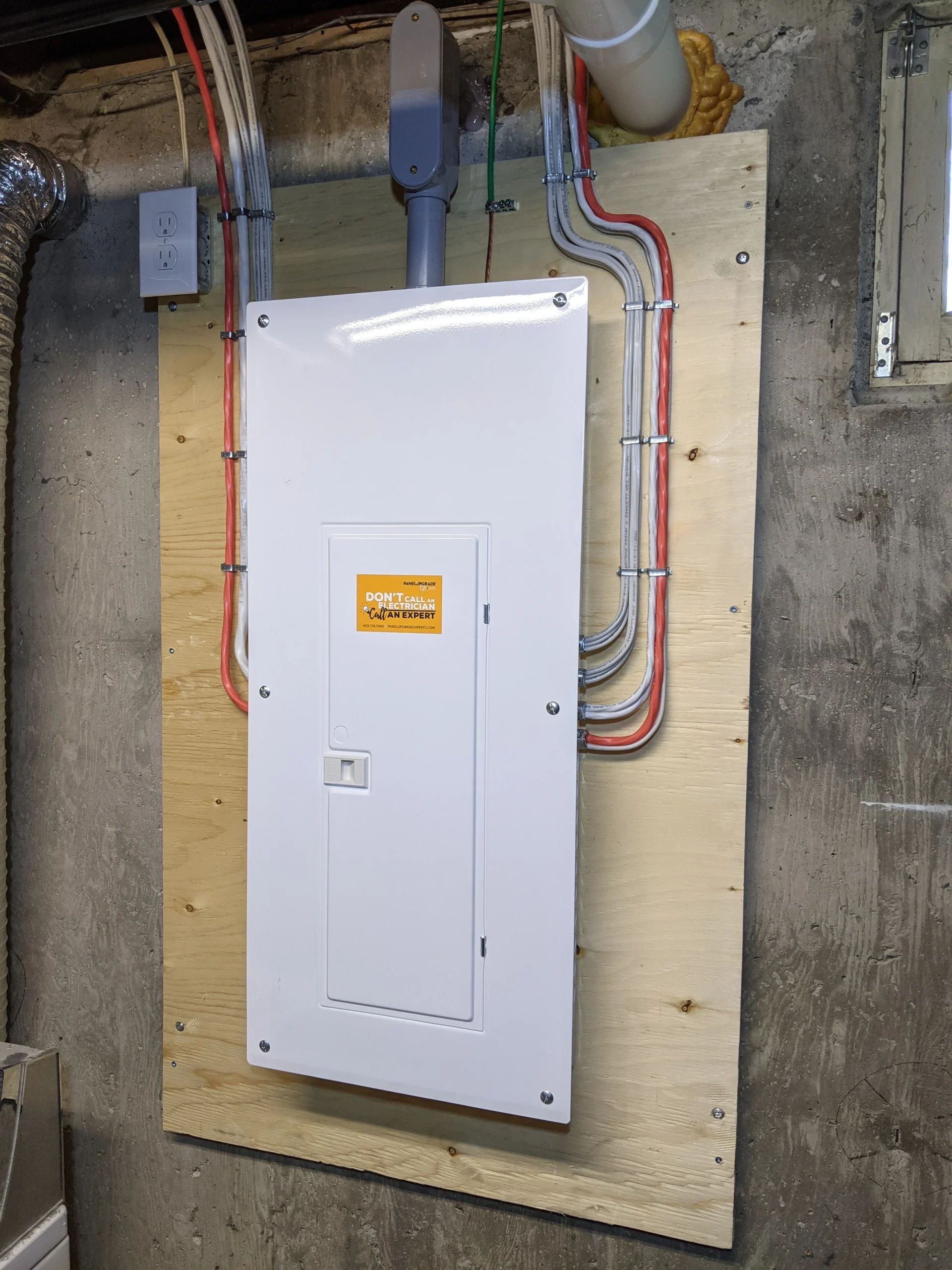
An electrical panel is one of the most important components of a home’s electrical system. It distributes electricity throughout the property and provides circuit protection for lighting, appliances, heating equipment, and other electrical loads.
When a panel becomes outdated, homeowners often assume the only solution is to upgrade from 100-amp to 200-amp electrical service.
However, replacing an electrical panel and increasing electrical service capacity are two different projects. In many homes, replacing an aging 100-amp panel with a modern 100-amp panel is an appropriate solution.
Understanding the difference can help homeowners make informed decisions and avoid unnecessary expenses.
Why Electrical Panels Need Replacing
Electrical panels can remain in service for decades, but age alone does not determine whether replacement is necessary.
Several conditions may justify replacing an existing panel.
Aging or Damaged Components
Over time, electrical connections and equipment can deteriorate. Corrosion, moisture intrusion, overheating, and physical damage can affect the reliability and safety of an electrical installation.
Visible heat damage, unusual smells, or evidence of arcing should be investigated promptly by a qualified electrician.
Obsolete Circuit Breakers
Some older electrical panels use circuit breakers that are difficult to obtain or are no longer manufactured.
When compatible replacement breakers become unavailable, maintaining or repairing the equipment can become increasingly difficult.
Replacing the panel with modern equipment can improve serviceability and provide access to readily available replacement components.
Insurance Requirements
Some insurance providers request additional inspections or replacement of particular older electrical panels before issuing or renewing coverage.
These requirements vary between insurers and locations, making it important to confirm the specific concern before proceeding with an electrical upgrade.
Limited Circuit Space
Older panels may lack sufficient breaker spaces for additional circuits.
Installing a newer panel with more available spaces can improve circuit organization and accommodate future wiring changes, provided the existing electrical service has sufficient capacity.
Importantly, adding breaker spaces does not automatically increase the home’s available electrical capacity.
What Is the Difference Between a Panel Replacement and a Service Upgrade?
Although the terms are sometimes used interchangeably, they describe different types of electrical work.
A 100-amp electrical panel replacement generally involves removing an existing panel and installing a modern replacement with the same electrical rating.
Where the existing service entrance conductors, meter equipment, and other components remain suitable, they may not require replacement.
A 100-amp to 200-amp service upgrade, on the other hand, increases the electrical capacity available to the property.
Depending on the installation, this can involve replacing service conductors, upgrading meter equipment, modifying the electrical panel, and coordinating changes with the electrical utility.
Because the scope of work is considerably different, increasing service capacity is typically more expensive than replacing a panel without changing its amperage.
Is 100-Amp Electrical Service Still Enough?
Many homes continue to operate successfully with 100-amp electrical service.
The determining factor is not simply the property’s age or the number of appliances installed. It is the home’s calculated electrical demand.
For example, a property with gas heating, gas water heating, and moderate electrical loads may have substantially different capacity requirements from a similarly sized property with electric heating, an electric range, a hot tub, and multiple EV chargers.
A qualified electrician can perform an electrical load calculation using the applicable local electrical code to establish whether the existing service is adequate.
If sufficient capacity is available, replacing an outdated panel without upgrading the service may be the most practical solution.
What About EV Chargers, Heat Pumps, and Other Modern Appliances?
Modern electrical equipment can place additional demands on a home’s electrical system.
Common additions include:
- Level 2 electric vehicle charging equipment
- Central air conditioning
- Electric heat pumps and auxiliary heating
- Hot tubs and swim spas
- Electric ranges and clothes dryers
- Additional living spaces or secondary suites
However, installing one of these appliances does not automatically mean a home requires 200-amp electrical service.
The actual electrical demand must be assessed alongside existing household loads.
In some circumstances, electrical load management equipment can help accommodate additional loads without increasing the property’s service capacity.
For example, an EV charging load management system can temporarily reduce or interrupt charging when household electrical demand approaches a predetermined limit.
These systems must be correctly selected, installed, and approved for their intended application.
Why Replacing a 100-Amp Panel Can Be the Smarter Investment
Electrical upgrades should address an identified requirement rather than simply install the largest available equipment.
Replacing an outdated 100-amp panel while retaining suitable service infrastructure can offer several advantages.
Lower installation costs: Retaining existing service equipment where permitted can eliminate substantial work associated with increasing electrical capacity.
Modern electrical equipment: New panels provide access to current breaker designs, compatible components, and improved circuit identification.
Improved maintainability: Clearly labelled circuits and available replacement parts can simplify future servicing.
Reduced disruption: A straightforward panel replacement may involve less work than a complete service upgrade, although both require proper planning and a temporary electrical shutdown.
For homeowners comparing options, Calgary electrical contractor Panel Upgrade Experts provides information about 100-amp electrical panel replacements and situations where increasing service capacity may be necessary.
The important consideration is whether additional capacity is actually required, rather than assuming that every aging panel must be upgraded to 200 amps.
When Does a 200-Amp Service Upgrade Make Sense?
There are circumstances where increasing electrical service capacity is the appropriate long-term investment.
A larger service may be justified when an electrical load calculation indicates that existing capacity is insufficient, or when significant electrification and renovation projects are planned.
Examples include converting a home from gas heating to electric heating, installing multiple large electrical loads, or undertaking renovations that substantially increase calculated demand.
Before committing to the project, homeowners should also confirm that the utility infrastructure can support the requested service capacity.
In some locations, utility upgrades or changes to the service connection can add considerable expense.
Always Start With an Electrical Assessment
A modern electrical panel is a worthwhile improvement when existing equipment has become unsafe, obsolete, damaged, or unsuitable for the home’s needs.
But replacing an electrical panel should not automatically mean increasing electrical service capacity.
A qualified electrical contractor can inspect the installation, calculate electrical demand, identify equipment that requires replacement, and determine whether the existing service can remain.
Electrical panel work should be completed by appropriately qualified professionals, with the permits, inspections, and utility coordination required by local regulations.
For many homeowners, a properly installed modern 100-amp panel provides the practical solution they need—without the expense of an unnecessary 200-amp service upgrade.