
Greek Lemon Chicken Recipe: Juicy, Zesty & Full of Flavor

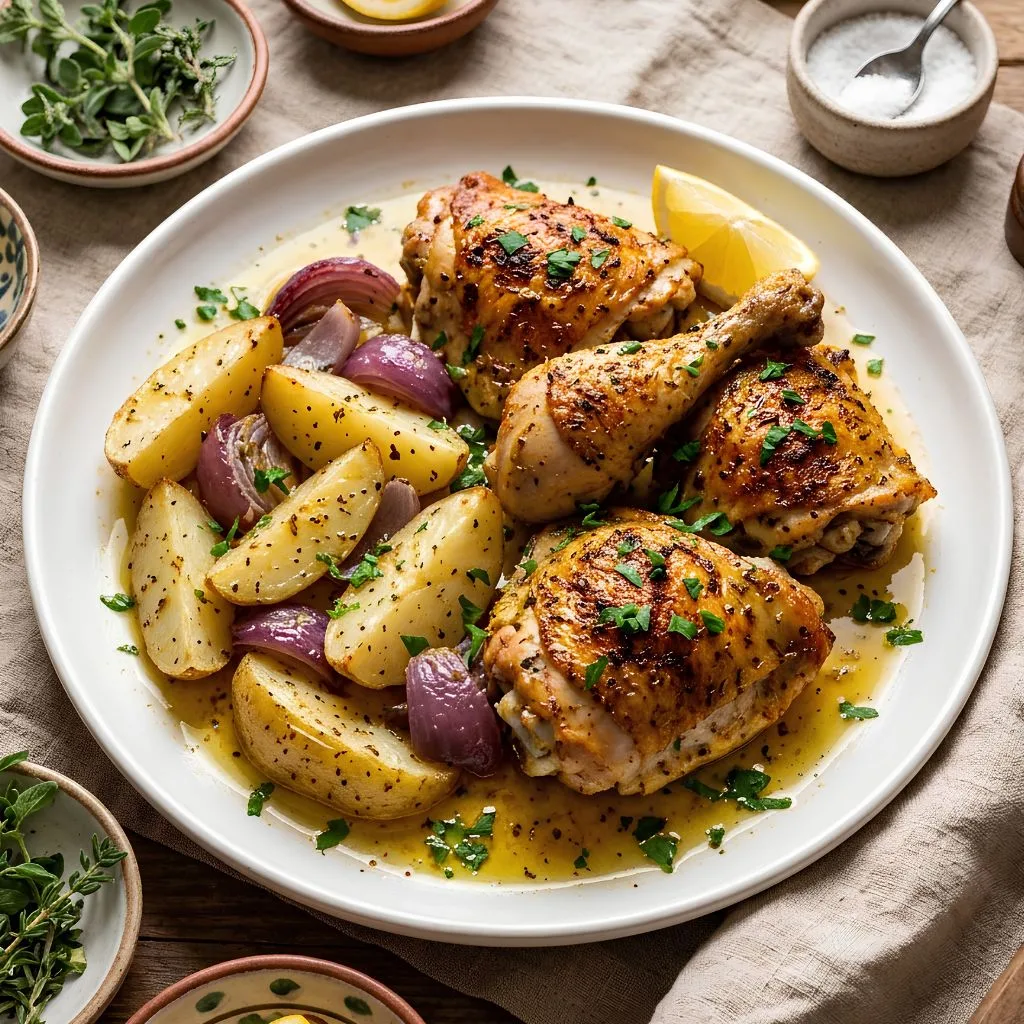
I love making Greek Lemon Chicken Recipe when I want a comforting dinner that feels fresh, flavorful, and easy to prepare. The combination of bright lemon juice, fragrant garlic, olive oil, and classic Mediterranean herbs gives every bite a delicious taste. When I make this recipe, I let the chicken soak up a simple lemon marinade before roasting it until golden and tender.
The best part is how the pan juices turn into a naturally flavorful sauce that tastes wonderful with roasted potatoes or rice. If you enjoy a homemade Greek chicken recipe with simple ingredients and plenty of flavor, this Greek lemon chicken deserves a place on your dinner menu.
Cooking Time
This recipe requires a little preparation, followed by oven roasting to develop its delicious flavor and golden exterior.
- Prep Time: 15 minutes
- Marinating Time: 30 minutes (minimum recommended)
- Cooking Time: 40–45 minutes
- Total Time: Approximately 1 hour 30 minutes, including marinating
Ingredients for Greek Lemon Chicken
The ingredients below create a flavorful Mediterranean-style marinade for approximately four servings. Fresh lemon, good-quality olive oil, garlic, and dried oregano are the foundation of this dish.
- 2 pounds (900 g) bone-in, skin-on chicken thighs or drumsticks – These cuts stay juicy during roasting and develop beautifully golden skin.
- 1/4 cup extra-virgin olive oil – Adds richness and helps distribute the marinade evenly over the chicken.
- 1/4 cup fresh lemon juice – Provides the signature tangy flavor; freshly squeezed juice tastes brighter than bottled juice.
- 1 tablespoon lemon zest – Adds fragrant citrus oils without making the marinade overly sour.
- 5 garlic cloves, minced – Gives the chicken its savory Mediterranean aroma; mince fresh garlic for the best flavor.
- 2 teaspoons dried oregano – Provides the earthy, herbal character associated with Greek cooking.
- 1 teaspoon dried thyme – Adds a subtle herbal note that complements the lemon and garlic.
- 1 teaspoon Dijon mustard – Helps emulsify the marinade and adds a gentle savory depth.
- 1 teaspoon kosher salt – Season the meat throughout; adjust the amount to suit your taste and salt brand.
- 1/2 teaspoon freshly ground black pepper – Adds warmth and balances the citrus.
- 1/2 teaspoon sweet paprika – Helps give the chicken an appetizing golden color and mild warmth.
- 1 tablespoon chopped fresh parsley – Makes a fresh, colorful garnish just before serving.
- 1 lemon, cut into wedges – Use the wedges for serving or roasting alongside the chicken.
Note: Serves 4 people, depending on portion size and the sides served.
Optional ingredients for Greek lemon chicken and potatoes in oven:
- 1 1/2 pounds (680 g) Yukon Gold or other roasting potatoes, cut into wedges – Choose firm potatoes that hold their shape as they roast.
- 1/2 cup chicken broth – Adds moisture to the roasting pan and helps create flavorful pan juices.
- 1 small red onion, cut into wedges – Brings a mild sweetness and a lovely roasted color.
These optional additions turn the dish into a satisfying one-pan dinner. If you add potatoes, arrange them around the chicken and allow enough room for the ingredients to roast instead of steam.
Equipment You Need
Having everything ready before you begin makes this Greek lemon chicken recipe much easier to prepare.
- Large mixing bowl – Whisk together the lemon, olive oil, garlic, and herbs.
- Measuring cups and spoons – Help you maintain the right balance of citrus, oil, and seasonings.
- Microplane or fine grater – Removes the lemon zest without including too much bitter white pith.
- Sharp knife and cutting board – Make it easier to prepare the garlic, lemon wedges, and optional vegetables.
- Baking dish or roasting pan – Holds the chicken and catches the flavorful juices during cooking.
- Tongs – Let you turn or arrange the chicken without damaging the skin.
- Instant-read meat thermometer – Checks doneness accurately and helps prevent dry chicken.
- Aluminum foil – Can loosely cover the chicken if it browns too quickly during roasting.
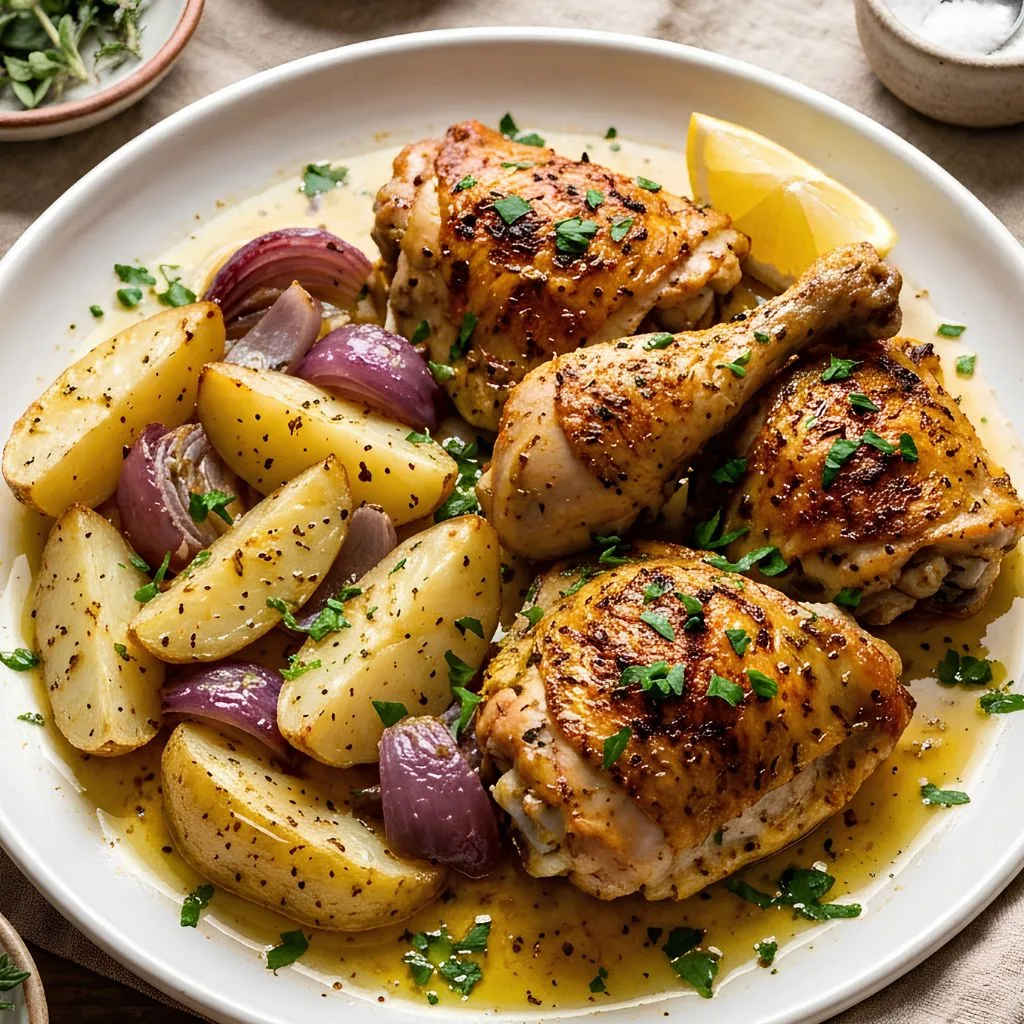
How to Make a Greek Lemon Chicken Recipe?
This Greek lemon chicken recipe relies on a simple marinade and a hot oven to create tender meat with plenty of citrusy flavor. I recommend using fresh lemon juice, allowing enough time for marinating, and arranging the chicken in a single layer. Follow these easy steps for a delicious main course that works for both busy weeknights and relaxed family dinners.
Step 1: Prepare the Chicken
Pat the chicken dry with paper towels, paying particular attention to the skin. Removing excess moisture helps the exterior brown rather than steam.
Arrange the chicken on a clean plate or in a shallow dish while you prepare the marinade. If you are using potatoes, cut them into evenly sized wedges so they cook at a similar rate.
Step 2: Make the Greek Lemon Chicken Marinade
In a large bowl, whisk together the olive oil, fresh lemon juice, lemon zest, minced garlic, oregano, thyme, Dijon mustard, salt, pepper, and paprika. Mix until the ingredients are well combined.
This Greek lemon chicken marinade recipe balances acidity, herbs, and richness. The olive oil carries the aromatic seasonings, while the lemon adds a bright, fresh flavor.
Step 3: Marinate the Chicken
Add the chicken to the bowl and turn each piece until it is thoroughly coated. Gently work some marinade under the skin without tearing it.
Cover and refrigerate for at least 30 minutes, or for a few hours when convenient. For food safety, never leave raw chicken marinating at room temperature, and avoid excessively long marinating times in a highly acidic mixture.
Step 4: Prepare the Oven and Baking Dish
Preheat the oven to 400°F (200°C). Lightly grease a suitable roasting dish if necessary, then arrange the marinated chicken in a single layer with the skin facing upward.
For Greek lemon chicken and potatoes in oven, add the prepared potatoes and onion around the chicken. Toss them with some of the remaining marinade and chicken broth, keeping the chicken skin exposed so it can brown.
Step 5: Roast Until Golden
Place the dish in the preheated oven and roast for approximately 40–45 minutes, depending on the size and cut of the chicken. Avoid overcrowding the pan, as too much moisture can prevent the skin from crisping.
If you are including potatoes, turn them partway through cooking so they brown evenly. Check the chicken with an instant-read thermometer; it must reach at least 165°F (74°C) in the thickest part, away from the bone.
Step 6: Check the Potatoes and Pan Juices
Pierce the potatoes with a fork to check that they are tender inside and lightly browned outside. If they need more time, continue roasting while monitoring the chicken’s temperature and color.
The pan juices should smell fragrant and contain a delicious blend of lemon, garlic, herbs, and chicken drippings. If the chicken is done before the potatoes, transfer it to a clean plate and continue cooking the potatoes until tender.
Step 7: Rest and Garnish
Remove the roasting dish from the oven and let the chicken rest for about 5 minutes before serving. Resting allows the juices to settle and makes the meat more enjoyable to eat.
Scatter freshly chopped parsley over the chicken and add lemon wedges for extra brightness. Spoon a little of the cooked pan juice over each portion just before bringing the dish to the table.
Step 8: Serve Your Greek Lemon Chicken
Arrange the chicken on a warm serving platter, with the roasted potatoes and onions surrounding it if you made the one-pan version. Drizzle the pan juices over the top, but keep the crispy skin as exposed as possible.
Serve immediately with a Greek salad, steamed vegetables, rice, or warm pita bread. A final squeeze of lemon brings the herbs and garlic into focus and makes the dish taste especially fresh.
Additional Tips for Making This Recipe Better
After making lemon-and-herb chicken, I find that a few small details can make a noticeable difference in flavor, texture, and presentation.
- I always pat the chicken dry before adding the marinade because excess surface moisture can interfere with browning.
- I prefer fresh lemon juice and zest together; the juice provides tanginess, while the zest adds a more concentrated citrus aroma.
- I let the chicken marinate in the refrigerator for at least 30 minutes when I have time, giving the seasonings a chance to coat the meat thoroughly.
- I arrange the chicken skin-side up and leave space between the pieces to encourage even roasting.
- I use an instant-read thermometer instead of relying on color alone, because chicken can look cooked before it reaches a safe internal temperature.
- I taste the pan juices before serving and add a small squeeze of fresh lemon if they need more brightness.
- I give the chicken a short rest after roasting, then add fresh parsley just before serving for a cleaner, fresher finish.
Common Mistakes to Avoid
These are a few problems I watch out for when preparing Greek lemon chicken at home.
- Using too much lemon juice: I keep the marinade balanced because excessive acidity can affect the texture of the chicken’s surface.
- Skipping the drying step: I pat the skin dry first so the chicken roasts instead of steaming.
- Overcrowding the pan: I use a large enough dish to give the chicken and potatoes space to brown properly.
- Guessing when the chicken is done: I check the thickest part with a thermometer and ensure it reaches at least 165°F (74°C).
- Adding fresh herbs too early: I reserve some parsley for the end because it looks brighter and tastes fresher as a finishing garnish.
How to Serve Greek Lemon Chicken?
Greek lemon chicken is versatile enough for casual family meals and attractive enough for a dinner party. A few simple sides and a thoughtful presentation can turn it into a complete Mediterranean-inspired meal.
- With roasted potatoes: Serve the chicken with golden potato wedges that have absorbed the lemon, garlic, and herb flavors.
- With Greek salad: Combine tomatoes, cucumber, red onion, olives, and feta for a crisp contrast to the warm chicken.
- With rice or orzo: Spoon the flavorful pan juices over plain rice or orzo to make the most of the citrusy sauce.
- With warm pita bread: Use pita to scoop up the pan juices and pair the meal with tzatziki.
- With roasted vegetables: Add green beans, zucchini, bell peppers, or carrots for more color and variety.
- For an attractive presentation: Place the chicken on a large platter, arrange lemon wedges and roasted vegetables around it, and finish with chopped parsley and freshly cracked black pepper.
For a traditional Greek-inspired dinner, I like serving the chicken with potatoes, a crunchy salad, and a small bowl of creamy tzatziki. This combination balances the roasted flavors with fresh vegetables and cool, tangy yogurt sauce.
Variations
You can easily adapt this Greek chicken recipe to suit different preferences, ingredients, and cooking styles.
- Greek lemon chicken breast: Use boneless, skinless chicken breasts and begin checking their internal temperature early, as they cook faster than bone-in thighs.
- Greek lemon chicken thighs: Choose bone-in, skin-on thighs for juicy meat and a crisp exterior, or use boneless thighs for quicker cooking.
- Authentic Greek lemon chicken and potatoes: Add potato wedges, onion, and chicken broth to the roasting dish for a rustic one-pan meal inspired by Greek home cooking.
- Dairy-free version: The basic recipe is naturally dairy-free, so no substitutions are needed.
- Lower-sodium option: Reduce the salt and choose a low-sodium broth if you are making the potato version.
- Sugar-free version: The basic marinade contains no added sugar; check any prepared mustard or broth labels if avoiding added sugars.
- Extra-garlicky chicken: Add another clove or two of garlic if you enjoy a stronger savory flavor.
- Spicy Greek chicken: Add a pinch of red pepper flakes to the marinade for gentle heat.
- Mediterranean vegetable variation: Include red onion, bell peppers, or zucchini, adding quick-cooking vegetables later if necessary.
- Fresh herb variation: Replace some of the dried herbs with fresh oregano or thyme, adjusting the quantity to suit their intensity.
- Grilled Greek chicken: Use the same marinade for grilling, adjusting the cooking time to the size and cut of the chicken and checking for safe doneness.
Nutritional Information
The following values are approximate estimates for one serving of chicken with the marinade, based on four servings and without optional potatoes, broth, or other sides. Actual nutrition varies with the cut of chicken, skin consumption, and how much marinade and pan juice you eat.
- Calories: 420 kcal
- Protein: 34 g
- Carbohydrates: 3 g
- Fat: 30 g
Make Ahead and Storage
Planning ahead makes this Greek lemon chicken recipe even more convenient for busy weekdays. Proper storage helps preserve its flavor and keeps leftovers enjoyable.
Make Ahead
I like preparing the marinade a day in advance and keeping it covered in the refrigerator until needed. You can also coat the chicken with the marinade and refrigerate it for 1–2 hours before cooking; avoid leaving it in the acidic mixture for too long because the texture may change.
Refrigeration
Allow leftover chicken to cool slightly, then transfer it to an airtight container and refrigerate within two hours of cooking. It generally keeps well for 3–4 days in a refrigerator maintained at 40°F (4°C) or below.
Freezing
For longer storage, place cooked chicken in a freezer-safe container or tightly sealed freezer bag and freeze for up to 3 months for the best quality. Thaw it in the refrigerator overnight before reheating, and avoid thawing chicken on the kitchen counter.
Reheating
I recommend reheating the chicken in an oven set to 325°F (165°C), adding a splash of chicken broth or water to keep the meat moist. Cover loosely with foil and heat until the center reaches 165°F (74°C); uncover briefly at the end if you want to refresh the skin’s crispness.
Why You’ll Love This Recipe
This recipe combines simple preparation with the bright, savory flavors that make Mediterranean-inspired meals so appealing. Here are a few reasons it can become a regular favorite.
- Fresh, vibrant flavor: Lemon juice, garlic, oregano, and thyme create a lively marinade that complements the natural richness of the chicken. The citrusy aroma makes the kitchen smell wonderful while the chicken roasts.
- Simple ingredients: You don’t need complicated sauces or specialty ingredients to make delicious Greek chicken. Most of the marinade ingredients are everyday pantry staples, with fresh lemons adding the finishing touch.
- Easy preparation: Once the chicken is marinated and arranged in a baking dish, the oven does most of the work. That leaves you time to prepare a salad, set the table, or make a simple side dish.
- Flexible serving options: Serve it with roasted potatoes, rice, vegetables, or pita bread to suit your meal. You can also remove leftover chicken from the bone and add it to wraps, grain bowls, and salads.
- Easy to customize: Adjust the garlic, herbs, and lemon to match your preferences, or use chicken breasts instead of thighs. The same basic marinade also works well with other Mediterranean-inspired ingredients.
FAQs
These frequently asked questions cover the most common ways to prepare, customize, and store Greek lemon chicken.
Can I use boneless chicken breasts instead of thighs?
Yes, you can use boneless, skinless chicken breasts with the same lemon-herb marinade. Because breasts cook faster and can dry out more easily, check their internal temperature early and remove them once they reach 165°F (74°C).
How long should I marinate Greek lemon chicken?
I recommend marinating the chicken in the refrigerator for 1–2 hours for a balanced flavor. Since lemon juice is acidic, avoid unnecessarily long marinating times that could affect the meat’s texture.
Can I make Greek lemon chicken and potatoes in the oven together?
Yes. Arrange evenly cut potato wedges around the chicken in a large roasting dish, add a little chicken broth, and roast until the potatoes are tender and the chicken is safely cooked. Check both separately because their cooking times may differ.
What is the secret to crispy Greek lemon chicken skin?
Pat the chicken skin dry before adding the marinade, arrange the pieces skin-side up, and leave space between them. If needed, finish with a brief broil while watching closely to prevent burning.
Is Greek lemon chicken healthy?
Greek lemon chicken provides protein, and its basic marinade uses olive oil, lemon, garlic, and herbs rather than a heavy cream sauce. The overall nutritional value depends on the chicken cut, portion size, skin, and sides you choose.
Final Thoughts
I love how this Greek lemon chicken recipe turns a handful of everyday ingredients into a satisfying, flavor-packed meal. The combination of fresh lemon, fragrant garlic, olive oil, and Mediterranean herbs creates juicy chicken with a beautiful golden finish.
Whether you prepare Greek lemon chicken thighs for a family dinner or make Greek lemon chicken and potatoes in the oven for a complete one-pan meal, the recipe is easy to adapt to your needs. Serve it with fresh salad, roasted vegetables, or rice, and don’t forget the lemon wedges.
Give this homemade Greek chicken recipe a try the next time you’re craving a bright, comforting dinner. Once you discover how easy it is to prepare, it may become one of your favorite ways to cook chicken.
