
Lemon Chicken Pasta Recipe: Easy, Fresh & Ready in 25 Minutes

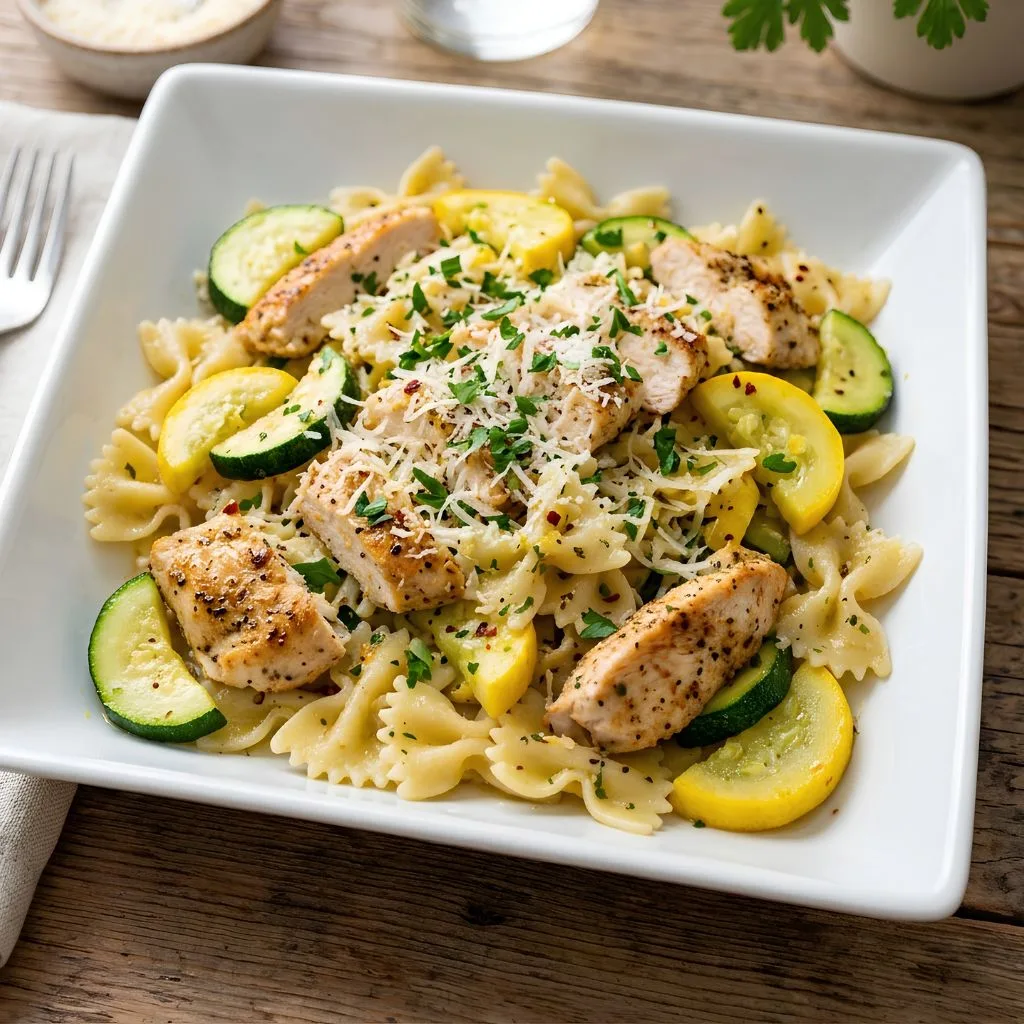
I love making Lemon Chicken Pasta Recipe when I want something fresh, comforting, and full of flavor without spending hours in the kitchen. The first time I made this dish, I was amazed by how beautifully fresh lemon juice, garlic, Parmesan cheese, and tender chicken worked together. I also love adding zucchini and yellow squash because they bring color, freshness, and a delicious vegetable boost to every bite.
What makes this recipe special is its light, buttery coating instead of a heavy cream sauce, so the pasta feels satisfying without being overly rich. Whether you’re planning a quick weeknight dinner or a relaxed family meal, this easy lemon chicken pasta is a recipe I keep coming back to.
Cooking Time
One of my favorite things about this recipe is how quickly it comes together. You can prepare the ingredients, cook the chicken and vegetables, and bring everything together in about 25 minutes.
- Prep Time: 10 minutes
- Cooking Time: 15 minutes
- Total Time: 25 minutes
Ingredients for Lemon Chicken Pasta
I use fresh ingredients to get the brightest lemon flavor and the best texture. These quantities make a generous family-style meal for five people.
- 16 ounces mini farfalle pasta: I like these little bow ties because they hold the buttery Parmesan coating, but other bite-size pasta shapes work well.
- 2–3 boneless, skinless chicken breasts: Chicken breast provides lean protein; flatten thicker pieces slightly for more even cooking.
- Salt and freshly ground black pepper, to taste: These simple seasonings bring out the flavor of the chicken and vegetables.
- 1 teaspoon lemon zest: I zest the lemon before juicing it to capture its fragrant outer peel.
- 1 teaspoon garlic powder, divided: This gives the chicken and vegetables a savory, garlicky flavor.
- 1 teaspoon Italian seasoning, divided: A convenient blend of herbs adds an Italian-inspired flavor to the dish.
- ½ teaspoon onion powder: This adds a subtle savory note to the chicken.
- 3 tablespoons olive oil, divided: Olive oil helps brown the chicken and cook the vegetables without sticking.
- 1 medium zucchini, chopped: Fresh zucchini adds a tender texture and a mild, slightly sweet flavor.
- 1 medium yellow squash, chopped: Yellow squash adds color and pairs beautifully with lemon.
- 3 garlic cloves, minced: Fresh garlic adds a stronger, more aromatic flavor than garlic powder alone.
- 4 tablespoons butter: Butter creates a silky coating that helps the lemon juice and Parmesan cling to the pasta.
- ¼ cup freshly squeezed lemon juice: Fresh lemon juice provides the bright, tangy flavor that defines this recipe.
- 1 cup freshly grated Parmesan cheese: I grate Parmesan from a block because it melts more smoothly than many packaged alternatives.
- ¼ cup fresh parsley, chopped: Fresh parsley adds a clean, herbal finish and makes the finished dish look beautiful.
Note: serves several — This recipe serves approximately 5 people, depending on portion sizes and side dishes.
Equipment You Need
A few everyday kitchen tools are all I need to make this easy lemon chicken pasta.
- Large pot: For boiling the pasta until tender.
- Large skillet: For cooking the chicken, sautéing vegetables, and combining everything.
- Colander: For draining the cooked pasta.
- Sharp knife: For chopping chicken, zucchini, squash, and garlic.
- Cutting board: For preparing the ingredients safely.
- Measuring cups and spoons: For measuring the lemon juice, seasonings, butter, and cheese.
- Zester or fine grater: For removing the fragrant lemon zest and grating fresh Parmesan.
- Tongs or a wooden spoon: For tossing the pasta and distributing the sauce evenly.
- Meat thermometer: For checking that the thickest part of the chicken reaches 165°F (74°C).
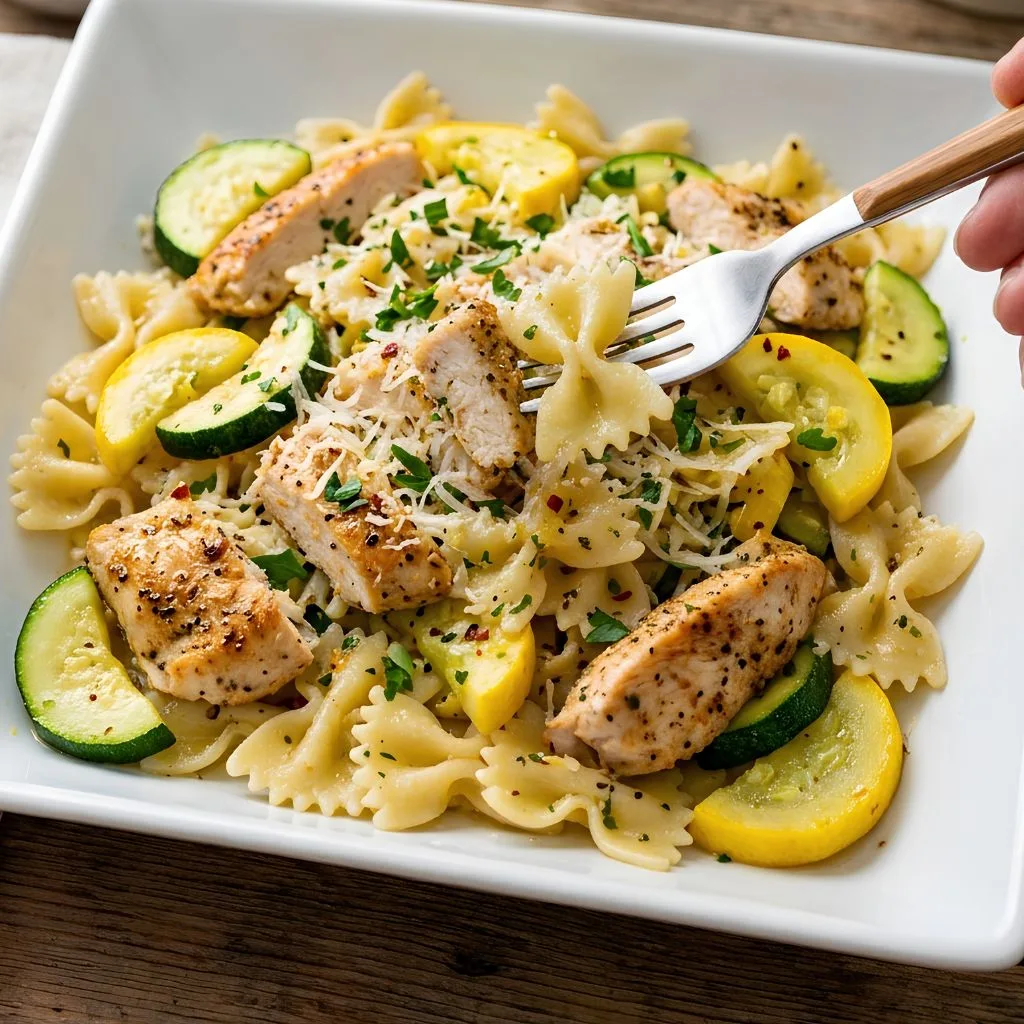
How to Make Lemon Chicken Pasta Recipe?
Making lemon chicken pasta is straightforward, even if you’re not an experienced cook. I prepare the ingredients first, cook the pasta and chicken, and then combine everything in one skillet. The key is to use fresh lemon juice and add the Parmesan while the pasta is still warm.
Step 1: Cook the Pasta
Bring a large pot of salted water to a boil and cook the mini farfalle according to the package instructions. Aim for tender pasta that still has a little bite, rather than letting it become mushy.
Drain the pasta well and set it aside while you prepare the chicken and vegetables. If you want a looser finish, reserve a little pasta water before draining.
Step 2: Season the Chicken
Pat the chicken breasts dry with paper towels so they brown nicely in the skillet. Season both sides with salt, black pepper, lemon zest, ½ teaspoon garlic powder, ½ teaspoon Italian seasoning, and the onion powder.
Coating the chicken evenly helps every bite taste flavorful. If the breasts are especially thick, flatten them slightly so they cook more consistently.
Step 3: Cook the Chicken
Heat about 2 tablespoons of olive oil in a large skillet over medium-high heat. Add the seasoned chicken and cook for approximately 3–5 minutes per side, adjusting the time for thickness.
Check that the center reaches 165°F (74°C) before removing the chicken from the skillet. Place it on a plate, cover loosely with foil, and let it rest while you cook the vegetables.
Step 4: Sauté the Zucchini and Yellow Squash
Add the remaining tablespoon of olive oil to the same skillet. Once hot, add the chopped zucchini and yellow squash, then season with salt, black pepper, the remaining garlic powder, and the remaining Italian seasoning.
Cook for about 2 minutes over medium-high heat, stirring occasionally. Add the minced garlic and cook for another 30 seconds, just until fragrant; avoid browning it too much.
Step 5: Add the Pasta, Butter, and Lemon
Add the hot, drained pasta to the skillet with the vegetables. Add the butter and freshly squeezed lemon juice, then toss gently until the butter melts and coats the pasta.
I like to add the lemon juice gradually and taste as I go. This makes it easier to achieve a balanced flavor without letting the citrus overpower the chicken and vegetables.
Step 6: Stir in the Parmesan Cheese
Sprinkle the freshly grated Parmesan over the warm pasta and toss until the cheese is distributed throughout. The warmth helps it blend with the melted butter and lemon juice to create a flavorful coating.
If the pasta looks a little dry, add a small splash of reserved pasta water and toss again. This helps loosen the coating without requiring heavy cream.
Step 7: Slice the Chicken and Combine
Slice the rested chicken into strips or bite-size pieces. Return it to the skillet and gently toss everything together so the chicken, vegetables, and pasta are evenly distributed.
Taste the dish and adjust the salt, pepper, or lemon juice if needed. I prefer to make small adjustments at this stage rather than adding too much seasoning at the beginning.
Step 8: Garnish and Serve
Transfer the lemon chicken pasta to a large serving bowl or divide it among individual plates. Finish with freshly chopped parsley and a little extra grated Parmesan.
Serve immediately while the pasta is warm and the cheese is tender. A side of crusty bread or a simple green salad makes this meal feel complete.
Additional Tips for Making This Recipe Better
These are the little details I pay attention to when I want a particularly flavorful skillet of lemon chicken pasta.
- I always choose fresh lemons. Freshly squeezed juice has a brighter taste than bottled juice, and a little zest adds an extra layer of citrus aroma.
- I grate Parmesan myself. Freshly grated cheese blends more easily into the warm pasta and gives the finished dish a better texture.
- I avoid overcrowding the chicken. If the skillet is too full, the chicken may steam instead of browning, so I cook it in batches when necessary.
- I keep the vegetables slightly tender. I don’t cook the zucchini and squash for too long because a little texture makes the pasta more enjoyable.
- I taste before serving. I add extra lemon juice, pepper, or Parmesan only after checking the overall balance.
- I save some pasta water. A small splash can help bring the buttery coating together if the pasta absorbs too much moisture.
- I use fresh parsley at the end. Its bright, herbal flavor makes a noticeable difference compared with dried parsley flakes.
Common Mistakes to Avoid
I’ve found that a few small mistakes can affect the flavor and texture of this recipe, but they’re easy to prevent.
- Overcooking the chicken: I use a thermometer and remove the chicken once it reaches 165°F (74°C) to help keep it juicy.
- Using too much lemon juice at once: I add it gradually and taste before adding more, so the finished pasta stays balanced.
- Adding Parmesan to cold pasta: I toss the cheese into the warm pasta so it blends more smoothly with the butter and lemon.
- Cooking garlic for too long: I add minced garlic after the vegetables have started cooking and stop once it becomes fragrant to avoid a bitter flavor.
- Overcooking the vegetables: I keep the zucchini and squash slightly firm so they don’t turn watery or disappear into the pasta.
How to Serve Lemon Chicken Pasta?
Presentation makes this simple meal feel special, whether I’m serving family at the table or preparing dinner for guests.
- Serve in shallow bowls: A wide bowl shows off the chicken, colorful vegetables, and pasta.
- Add fresh Parmesan: Grate a little cheese over each portion just before serving.
- Finish with parsley and lemon zest: A sprinkle of green parsley and a small amount of yellow lemon zest creates a fresh, colorful finish.
- Include crusty bread: Warm bread is useful for enjoying any buttery lemon coating left in the bowl.
- Pair with a green salad: A crisp salad with a light dressing complements the savory pasta.
- Add lemon wedges on the side: This lets everyone adjust the citrus flavor to their preference.
I recommend serving the dish immediately after combining the ingredients. The pasta tastes freshest when the butter is melted, the chicken is warm, and the Parmesan is still soft.
Variations
One reason I enjoy this lemon pasta recipe is that it’s easy to adapt to different preferences and ingredients.
- Lemon chicken pasta no cream: Keep the original butter, lemon juice, and Parmesan combination. It creates a flavorful coating without adding heavy cream.
- Creamy lemon chicken pasta recipe: Stir in a small amount of heavy cream over low heat before adding the Parmesan. Avoid boiling the sauce after adding cream.
- Creamy lemon chicken pasta with spinach: Replace some or all of the zucchini and squash with fresh spinach, stirring it in until just wilted.
- Extra vegetable version: Use broccoli, asparagus, or another favorite vegetable instead of the zucchini and yellow squash.
- Whole-wheat pasta option: Replace regular pasta with whole-wheat pasta for a nuttier flavor and additional fiber.
- Gluten-free version: Use your favorite gluten-free bite-size pasta and follow the package cooking instructions.
- Dairy-free alternative: Use a plant-based butter alternative and dairy-free Parmesan-style cheese. The flavor and melting texture may differ from the original.
- More garlic flavor: Add another minced garlic clove if you prefer a stronger, more savory finish.
- Lemon chicken piccata-inspired pasta: Add capers for a briny, tangy twist reminiscent of chicken piccata.
- A Jamie Oliver-inspired variation: For a fresh, rustic approach, emphasize lemon, garlic, herbs, vegetables, and good olive oil. This is a general cooking-style variation, not a recipe attributed to Jamie Oliver.
Nutritional Information
The following figures are estimates per serving, based on the source recipe’s published nutritional information. Actual values depend on the ingredients, portion sizes, and substitutions you use.
- Calories: Approximately 650 kcal
- Protein: Approximately 29 g
- Carbohydrates: Approximately 75 g
- Fat: Approximately 26 g
For a lighter meal, I would consider a smaller pasta portion and extra vegetables. Keep in mind that reducing butter, Parmesan, or pasta will change the nutritional values.
Make Ahead and Storage
I find this recipe tastes best freshly prepared, but it’s also practical for meal prep when stored and reheated carefully.
Make Ahead
You can chop the zucchini, squash, garlic, and parsley ahead of time and keep them refrigerated in separate airtight containers. You can also grate the Parmesan and zest the lemon in advance, making dinner preparation quicker.
For the freshest flavor, I prefer cooking the pasta and chicken close to serving time and combining everything just before eating.
Refrigeration
Let leftovers cool promptly and refrigerate them in a shallow, airtight container within 2 hours of cooking. Store at 40°F (4°C) or below and eat within 3–4 days.
Keep in mind that pasta absorbs some of the lemon-butter coating as it sits, so leftovers may seem less moist than the freshly made dish.
Reheating
Reheat individual portions in a skillet over low to medium-low heat with a small splash of water. Stir gently until the pasta is hot throughout, adding a little more liquid if needed.
You can also use a microwave-safe dish, cover it loosely, and heat in short intervals, stirring between each one. Reheat leftovers to 165°F (74°C), and avoid repeatedly cooling and reheating the same portion.
Freezing
You can freeze the cooked chicken and pasta in an airtight, freezer-safe container for about 1–2 months for best quality. However, the zucchini and squash may soften, and the Parmesan coating may become less smooth after thawing.
Thaw overnight in the refrigerator and reheat thoroughly. If possible, I prefer freezing the cooked chicken separately and preparing the pasta fresh for a better texture.
Why You’ll Love This Recipe
This recipe brings together the comfort of pasta and the freshness of lemon in a meal that’s easy to prepare and flexible enough for different occasions.
- Quick enough for busy evenings: I can have dinner on the table in about 25 minutes, making this an excellent choice when I don’t want a complicated recipe.
- Fresh, balanced flavor: Lemon juice, zest, garlic, and Parmesan provide brightness and savory depth without making the dish feel too heavy.
- A complete family meal: Chicken supplies protein, while zucchini and squash add vegetables and color alongside the pasta.
- Easy to customize: I can swap the vegetables, change the pasta shape, add spinach, or make the sauce creamier depending on what’s in my kitchen.
- Simple ingredients, impressive results: There’s no need for a long ingredient list or complicated sauce-making technique to create a satisfying meal.
FAQs
Here are answers to common questions about preparing, adapting, and storing lemon chicken pasta.
Can I make lemon chicken pasta without cream?
Yes! This recipe doesn’t require heavy cream. Butter, fresh lemon juice, and grated Parmesan create a flavorful coating that keeps the dish bright and satisfying.
What pasta works best for lemon chicken pasta?
Mini farfalle is a great choice because its shape holds the coating well. Penne, fusilli, rotini, or another bite-size pasta can also work beautifully.
Can I add spinach to lemon chicken pasta?
Absolutely. Replace some of the zucchini or squash with fresh spinach and stir it into the hot skillet until just wilted. This adds color and makes the dish more vegetable-forward.
How do I keep lemon chicken pasta from becoming dry?
Reserve a little pasta water before draining, and add a splash when tossing the ingredients together. When reheating leftovers, a little water also helps loosen the coating.
Can I make lemon chicken pasta ahead of time?
Yes. You can prepare the vegetables, garlic, lemon zest, and Parmesan in advance. Cooked leftovers can be refrigerated for 3–4 days, although the texture is best when the pasta is freshly combined with the sauce.
Final Thoughts
This lemon chicken pasta recipe is proof that a satisfying dinner doesn’t need a complicated sauce or hours of preparation. I love the combination of tender chicken, bite-size pasta, fresh vegetables, bright lemon, and freshly grated Parmesan because every ingredient contributes something useful.
Whether you stick with the original no-cream version or try a variation with spinach, broccoli, or a little heavy cream, you can make this recipe fit your table. Keep the lemon fresh, avoid overcooking the chicken, and finish with parsley and Parmesan for a simple, delicious meal you’ll want to make again.
